What is happening right now
Central Vietnam is currently suffering severe flood damage. At least 41 people have died as of the 20th. Searches continue for 9 others who remain missing. This is extremely significant damage. As you can see in the photo below, the people in the lower left are waist-deep in water. In Japan, it’s extremely rare to experience flooding severe enough to reach waist level.
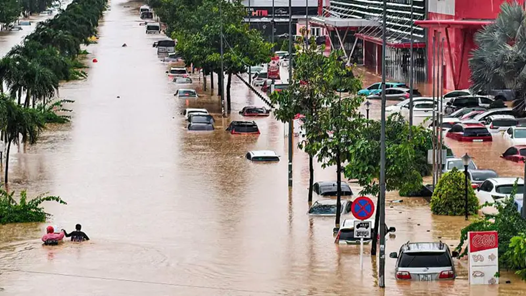
Even now, heavy rain continues to fall as recovery efforts are underway.
Why Central Vietnam Experiences Frequent Flooding
There are clear reasons why flooding occurs frequently in central Vietnam.
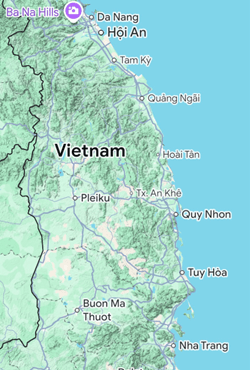
This is primarily due to the terrain. Mountains and the sea are close together, resulting in short rivers with steep gradients. This makes the rivers act like slides, rapidly pushing water downstream toward urban areas. Flooding occurs in the blink of an eye. Looking at the photos, you can see how close the riverbanks are.
Furthermore, this period coincides with the rainy season in central Vietnam.
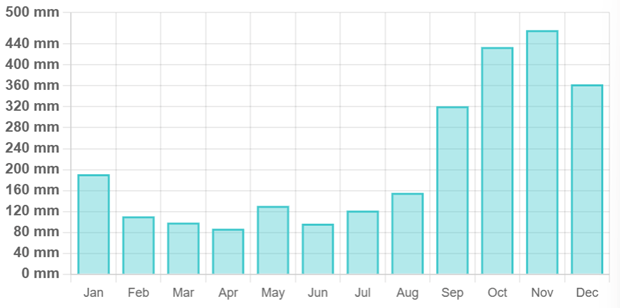
Annual precipitation in Da Nang
Specific Impacts on Vietnam’s Economy
Flooding of this magnitude will inevitably have a significant impact on Vietnam’s overall economic activity.
First, logistics across Vietnam will be disrupted. Vietnam is a long, narrow country stretching north to south. The central region is currently affected by the flooding. If major roads in the central region become impassable due to flooding and landslides, logistics will grind to a halt. When logistics stop, severe economic losses occur: raw materials and finished goods cannot be transported, and perishable goods spoil.
Next, factories flood, submerging and damaging expensive machinery and equipment. Even if factories themselves remain intact, surrounding roads may be flooded, preventing employees from commuting. Power outages halt operations, making work impossible. Without work, the economy grinds to a halt. Unfortunately, time doesn’t stop, meaning the economic losses during this period are immeasurable.
Finally, tourism significantly supports the economy of central Vietnam. However, flooding reduces the number of tourists. I believe the economy would develop further if the environment became more tourist-friendly. Yet, when typhoons strike, tour cancellations pile up, causing substantial economic losses.
The total economic loss from all these factors combined is estimated at approximately 358 million USD.
conclusion
I believe it is necessary to undertake river engineering projects for the mountainous regions to reinforce them and raise the embankments. While I understand these projects will require significant funding, I believe investing in them is more effective for the future, considering the substantial economic losses that will occur if central Vietnam continues to suffer flood damage for years to come.
Reference
https://www.bbc.com/japanese/articles/ckgm2ned70ro
https://weather-and-climate.com/average-monthly-precipitation-Rainfall,da-nang,Vietnam
 Cashflow Weekly 📚
Leave a comment